Frost line vs. damage boundary: what's the difference on a claim?
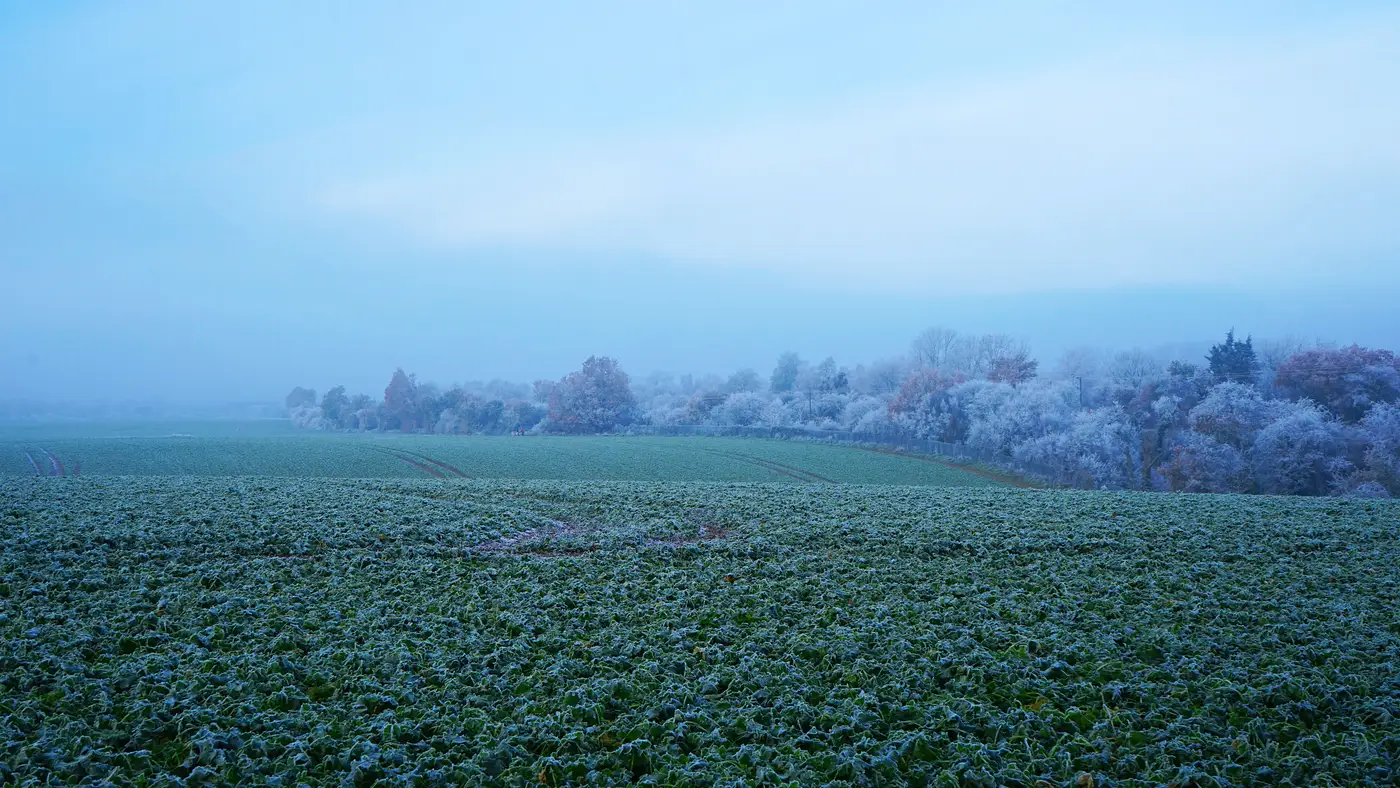
A grower calls in a frost loss and the first thing out of their mouth is usually "it hit everything below the frost line." An adjuster writes "damage boundary" on the same claim an hour later. Same event, two different lines, and they don't always land in the same place.
What the frost line marks
Frost line, in a field context, is a cold-air thing before it's a crop damage thing. Cold air is denser than warm air, so on a clear, calm night it drains downhill and pools in the low spots of a parcel the same way water would. A swale, a bench below a terrace, the toe of a slope running into a creek bottom. Growers who've worked a piece of ground for twenty years can usually point at the contour where that happens before the event even hits, because they've watched it happen before.
So the frost line is really a topographic prediction. It's where the grower expects the coldest air to sit long enough to do damage, based on elevation and drainage, not on anything measured after the fact. On orchard and vineyard ground especially, this line shows up in conversation constantly, because frost protection decisions (wind machines, overhead sprinklers, helicopters) get staged around it.
Why the damage boundary doesn't just copy that line
A damage boundary is the opposite kind of thing: it's drawn after the event, from what happened to the crop, not from what the terrain predicted. And the two lines diverge more often than growers expect.
A few reasons for that:
Duration matters more than depth of cold. A low pocket that sat at 28°F for twenty minutes can come through cleaner than a slightly higher bench that held at 30°F for four hours, because bloom-stage tissue is mostly about exposure time, not just the thermometer reading.
Canopy and row orientation break up the pattern. Wind machines running on one side of a parcel, a windbreak on the north edge, a block that got irrigated for frost protection and another that didn't: all of that can leave the injury scattered across the predicted frost line instead of following it cleanly.
Crop stage isn't uniform across a parcel. A block planted two weeks later than its neighbor can sit at a different bud stage during the same cold event, and bud stage changes how much cold it takes to cause injury. So the frost line might be identical in both blocks and the damage boundary still comes out different.
That gap is why the damage boundary has to be its own deliverable on the claim file, not assumed from the grower's mental map of where it always frosts. The predicted line tells you where to look first. It doesn't tell you where the injury actually stopped.
What this means for the file
On a frost claim, both lines are worth having, but they answer different questions. The frost line tells you where to expect trouble and helps frame the initial conversation with the grower, especially on ground with known cold pockets from past events. The damage boundary is the line that goes in the claim file: the delineated area of injury, with a severity call attached, drawn from what the crop shows after the event.
Getting from one to the other used to mean walking the parcel edge to edge and eyeballing where visible leaf scorch, bloom drop, or tissue damage tapered off, which is slow work on a big block and easy to get wrong at the margins where damage is patchy. A damage boundary and severity grade built from VHR imagery, ready to attach to the file before you ever walk the rows gets you that starting line without guessing at where the frost line's prediction held up.
Next frost event, pull the boundary before you plan the walk instead of after.