Total loss vs. partial loss after hail: where the line falls
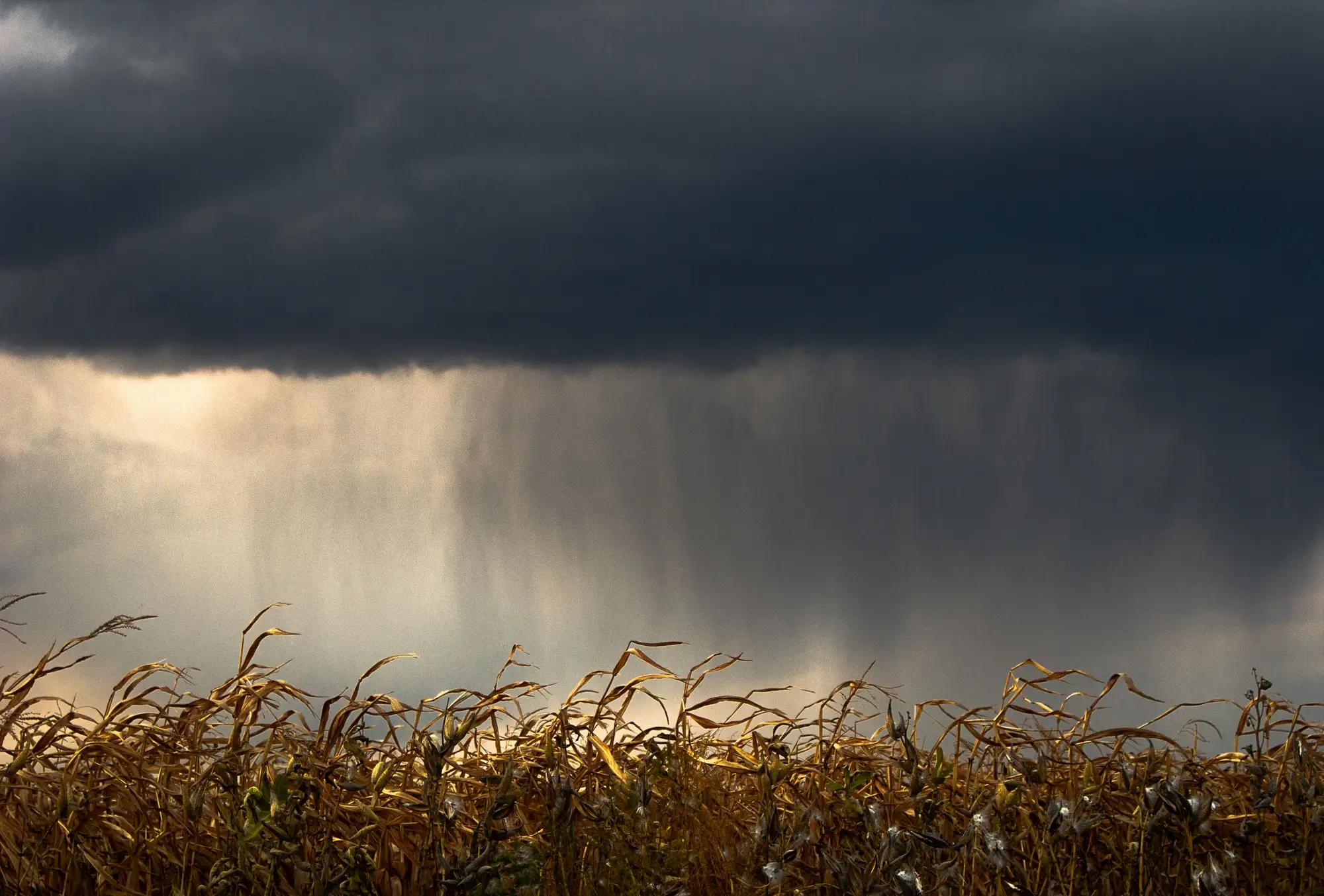
Every hail file comes down to one question: total loss, or partial and left to finish the season. The call rests on the policy terms, the crop's growth stage, and what's standing in the field when you get there.
What "total loss" means on an MPCI hail claim
On a federal MPCI policy, total loss is a production call. The remaining stand costs more to harvest than it would return, or it's so thin and uneven that a representative appraisal can't support continued production to maturity. A field can look wrecked at V6 and still come back with enough stand to finish the policy out as a partial, especially if the growing season has time left and moisture behind it.
Private hail policies, the kind written through a local agency rather than the federal program, often use flatter language: a stated percentage of defoliation or stand loss that triggers a total-loss payout regardless of regrowth potential. That's why the same field can get two different calls from two different adjusters working two different policies on the same storm. Read the policy before you read the field.
Where the percent damage threshold actually comes from
The number everyone wants, 50%, 70%, 80% defoliation, isn't fixed across crops or companies. Corn and soybeans use different appraisal guides at different growth stages, and a hail endorsement from one carrier can set its own total-loss trigger separate from the base MPCI policy. A stand-count appraisal at early vegetative stages weighs differently than a defoliation and bruise count taken at tassel or pod fill. The threshold that applies to the file in front of you is written into that policy's loss adjustment procedures, not into some industry-wide rule of thumb.
What stays consistent is the logic: the earlier the hit, the more weight regrowth and replant potential carry; the later the hit, the more the call turns on stalk and ear damage that won't heal before frost. A June hail event on young corn gets evaluated against replant and recovery. An August hit on a crop already past dent gets evaluated against what's left on the plant, period.
Why the boundary matters as much as the percentage
A single severity percentage for the whole insured unit can hide the real story. Hail swaths rarely cover a parcel evenly. One corner can take a washout while the opposite end barely gets touched, and if the total/partial call gets made off a windshield pass or a few stops along the field edge, the appraisal plots can land in the wrong zone entirely. That's the gap between a severity number and a severity map: knowing that 40% of the parcel took total-loss-level damage and the rest is salvageable changes where you plot, not just what you write down.
This is the piece we built Crop Loss Adjust around: a delineated damage boundary and severity grade pulled from VHR imagery tied to your parcel and the event date, ready to attach to the file before anyone sets a boot down. It doesn't replace the appraisal walk or the total/partial determination, that's still the adjuster's call against the policy. It gives you the shape of the damage inside the parcel first, so the plots you do walk are the ones that represent what happened.
Making the call stick
Whatever threshold the policy uses, document the basis for it the same way every time: growth stage at loss, the appraisal method used, and where inside the parcel the samples were taken relative to the damage pattern. A total-loss determination that only shows a percentage and no context for where that percentage came from is the kind of file that gets kicked back on review.
If you're staring down a fresh hail event and want the damage footprint before you're standing in it, that's the one thing we built to hand you first.